How Heston Blumenthal Invented the Triple-Cooked Chip
Discover how Heston Blumenthal revolutionised the humble chip with his innovative triple-cooking method, ensuring a perfect balance of crispiness and fluffiness.
# How Heston Blumenthal Invented the Triple-Cooked Chip
Before dry ice, snail porridge, or nitro-scented theatrical dining became synonymous with The Fat Duck, Heston Blumenthal was obsessed with a far humbler culinary puzzle: how to make the ultimate chip.
In a candid interview on the Go To Food channel, Blumenthal looked back at the early 1990s and revealed the relentless trial and error that led to his most copied innovation worldwide: the Triple-Cooked Chip.
The Fight Against Sogginess (1993)
Around 1993, two years before opening The Fat Duck in Bray, Heston set out to eliminate the ultimate enemy of a great chip: internal moisture ruining the outer crust.
Determined to dry out the potato's surface structure, he tested nearly every method imaginable in his home kitchen:
Microwaving chip batches to draw out steam.
Pin-pricking individual chips one by one prior to frying to let trapped moisture escape.
Extended freezing and drying stages between cooks.
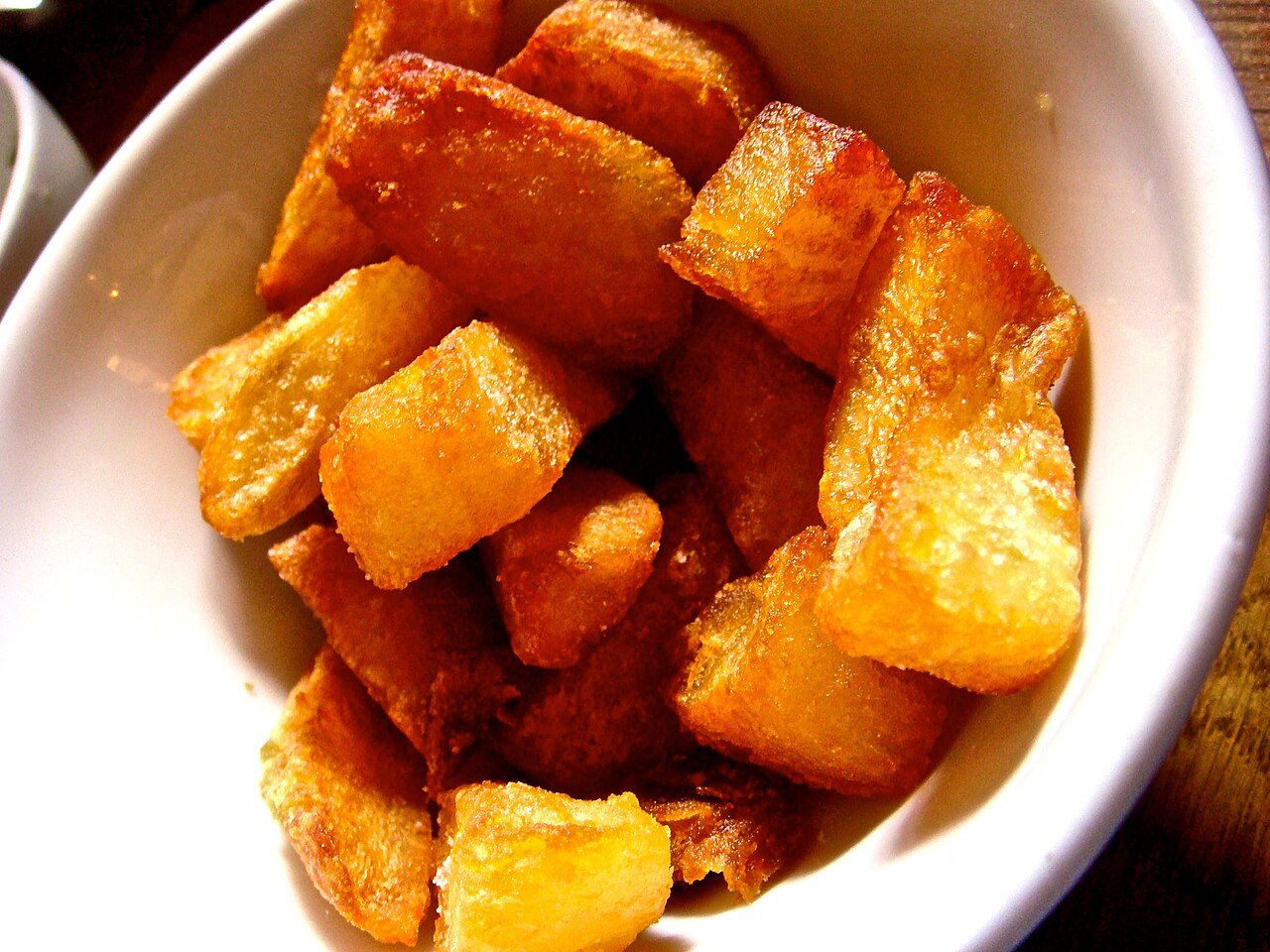
His breakthrough came when he realised that parboiling until the potato almost structurally falls apart, followed by a drying stage, allows starches to leach out. When fried for the second time, those starches dry and form a glass-like outer crust, which seals in fluffiness and protects against sogginess during the final high-heat crisping.
120-Hour Work Weeks and a £10.50 Steak
When The Fat Duck opened in 1995 in a rundown village pub, it was far from the multi-star Michelin temple of gastronomy it is today. Operating with just himself and a kitchen porter, Heston worked 120 hours a week while surviving on barely 20 hours of sleep.
The original menu was straightforward bistro fare:
Starters: £3.75
Desserts: £2.50
Steak and Triple-Cooked Chips: £10.50 (the most expensive item on the menu, breaking his fear of the £10 mark!)
Driven by Emotion
Reflecting on his journey, Heston noted that despite creating dozens of avant-garde molecular dishes over the decades, the Triple-Cooked Chip and the soft-centre Scotch egg remain his two most ubiquitous creations copied by pubs and restaurants globally.
For Heston, the obsession was never just about technical wizardry or chemical precision. It was about chasing the emotional high of a world-class dining experience and recreating it for every guest walking through the door.
# Triple-Cooked Chips (Heston Blumenthal – Summary Version)
Overview
A three-stage process designed to create chips that are extremely crisp on the outside
and fluffy inside. The key steps are: parboiling, low-temperature drying, and
two-stage frying.
A book to explore

Ingredients
- Large floury potatoes (e.g., Maris Piper or King Edward)
- Neutral frying oil (sunflower or rapeseed)
- Salt
Steps
1. Prepare the potatoes
- Peel the potatoes.
- Cut into thick chips (about 1.5–2 cm wide).
- Rinse under cold water to remove surface starch.
2. First cook: Parboil
- Place chips in a pot of cold, lightly salted water.
- Bring to a gentle simmer.
- Cook until the chips are very soft but not falling apart.
- Drain carefully.
- Spread on a tray and allow steam to escape.
3. Drying phase
- Place the drained chips in the fridge or freezer until the surface is dry
and the exterior becomes slightly firm.
- This step helps create micro‑cracks that lead to extra crispiness.
4. Second cook: Low-temperature fry
- Heat oil to about 130°C.
- Fry the chips until they form a pale crust but do not brown.
- Remove and drain.
- Cool completely (fridge or freezer again).
5. Final cook: High-temperature fry
- Heat oil to about 180°C.
- Fry the chips until golden and crisp.
- Drain and season with salt immediately.
Tips
- The drying phases are essential for the signature texture.
- Handle the chips gently after parboiling—they are fragile.
- Serve immediately for maximum crispness.
Heston Blumenthal
Explore our profile of Heston Blumenthal, including their television career, recipes and place in British food history.
View Heston BlumenthalRelated posts